Surgical Robotics#
To show the engine’s ability to support realistic surgical scenes and robot
learning workflows, CRESSim-Neo provides three example RL tasks for surgical
robotics: TissueRetract, BloodSuction, and UltrasoundScan.
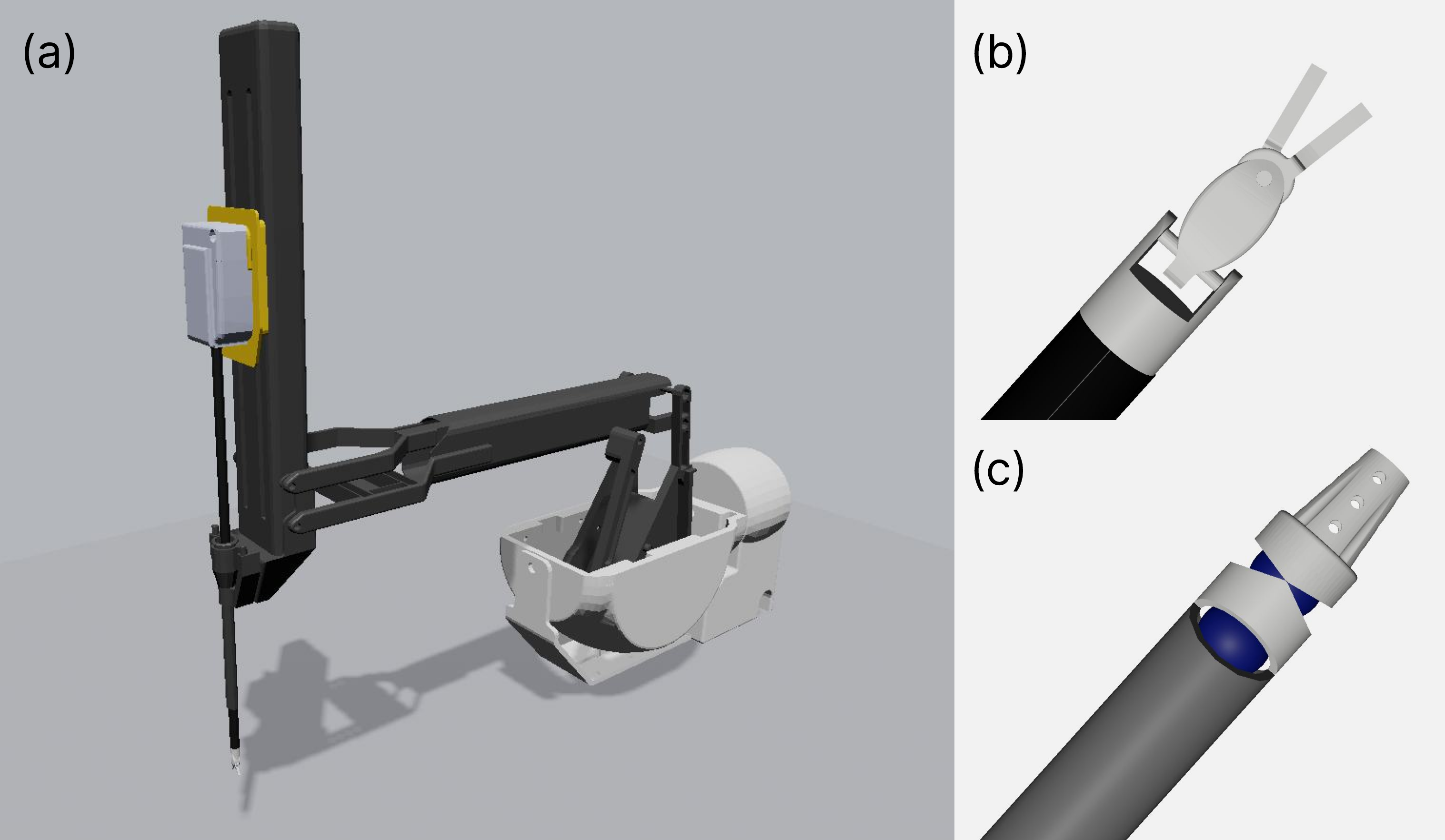
Simulated PSM robot from the dVRK: (a) full robot; (b) Large Needle Driver; and (c) Suction/Irrigator.#
With the physics capabilities described in Physics and Constraints, the
engine can simulate the patient-side manipulator (PSM) from the da Vinci
Research Kit. In TissueRetract, the PSM tool approaches a selected target
location on a deformable tissue patch, establishes a particle-rigid attachment,
and lifts the tissue to a target height. In BloodSuction, a PSM with a
suction-irrigator tool interacts with fluid particles inside a deformable
container, drawing nearby particles toward the tool and removing particles that
reach the suction region. UltrasoundScan is a batched environment in which a
linear ultrasound probe is moved over deformable tissue to center a target dark
area in the ultrasound image.
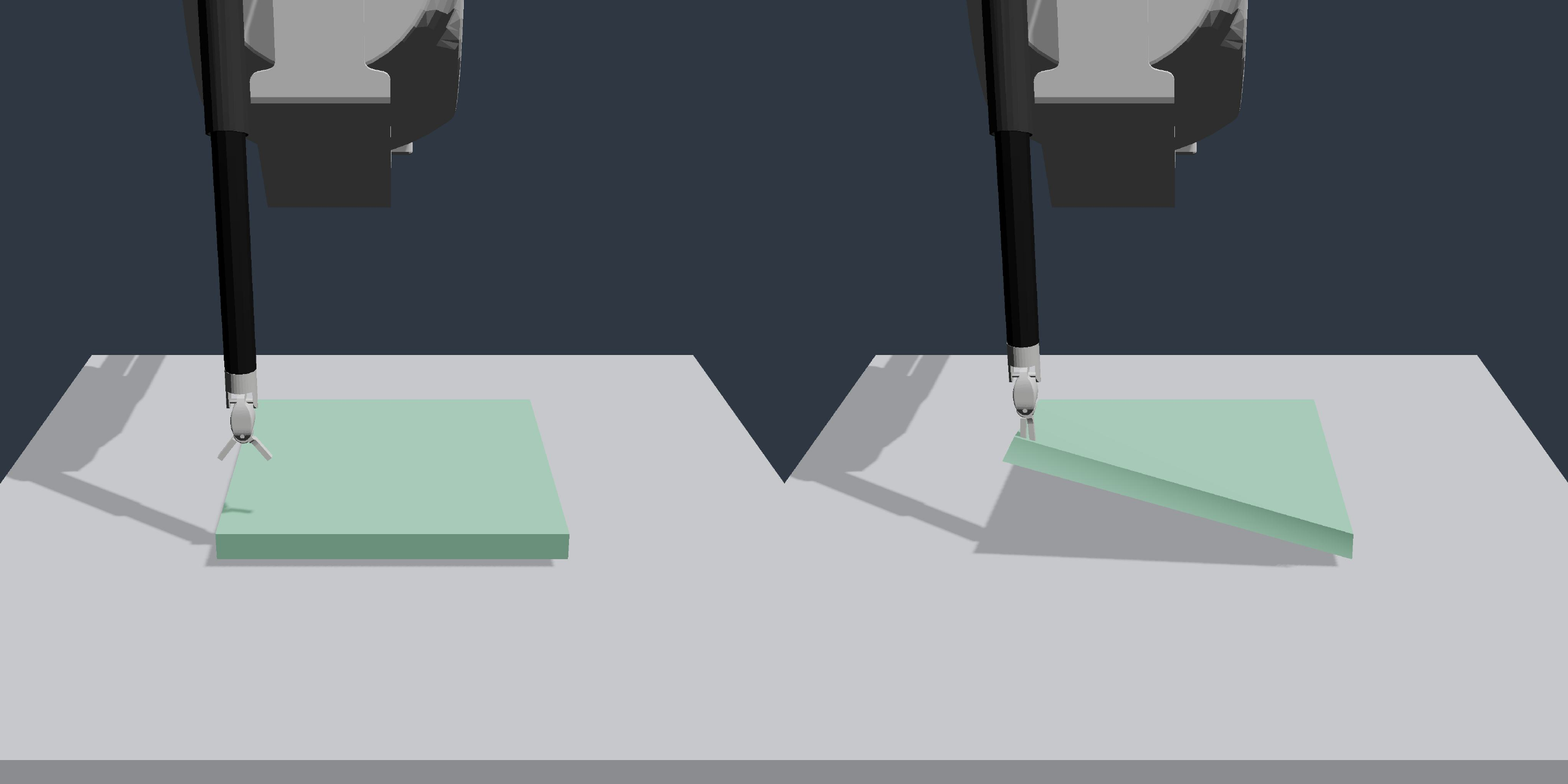
TissueRetract.#
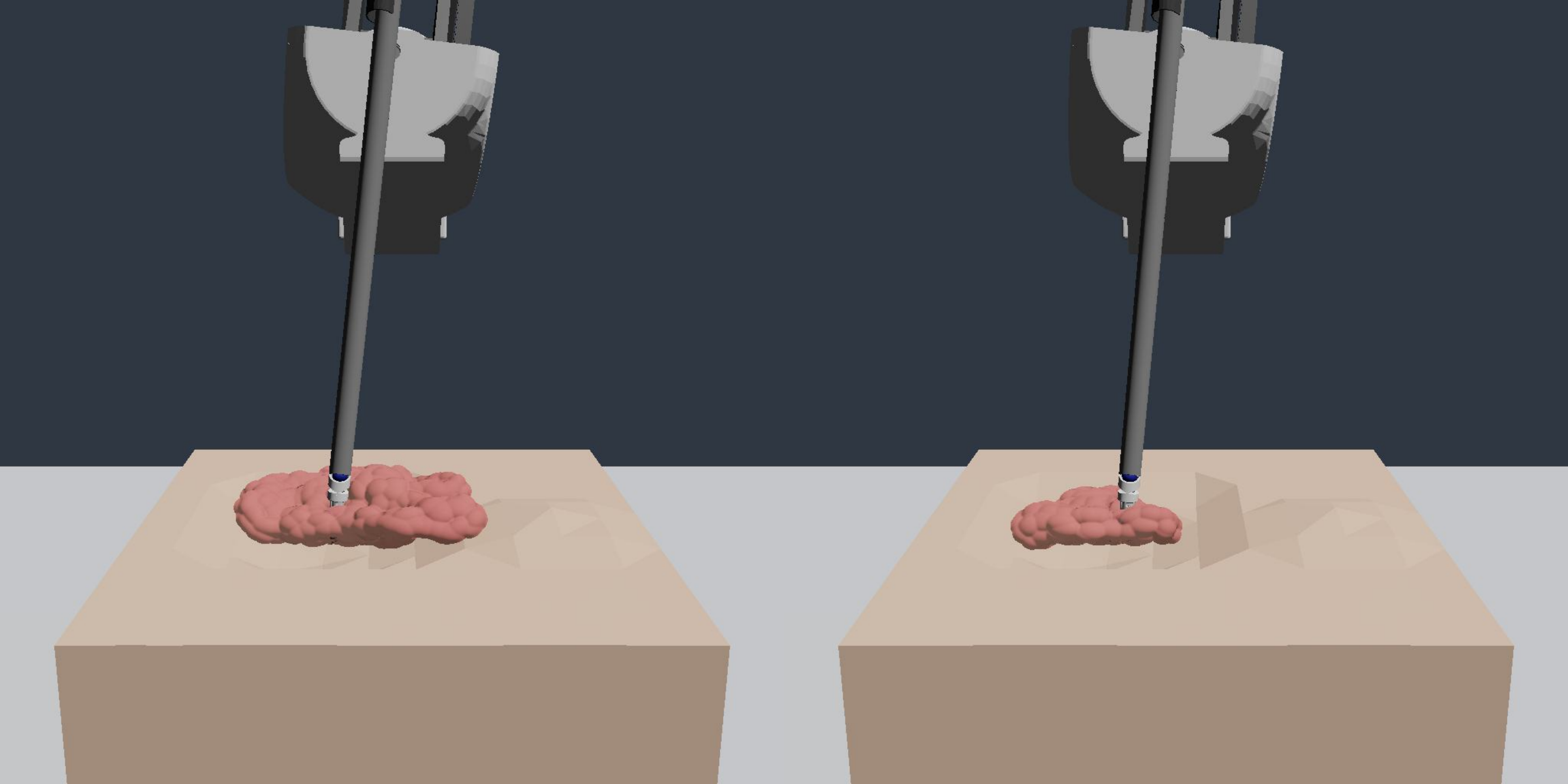
BloodSuction.#
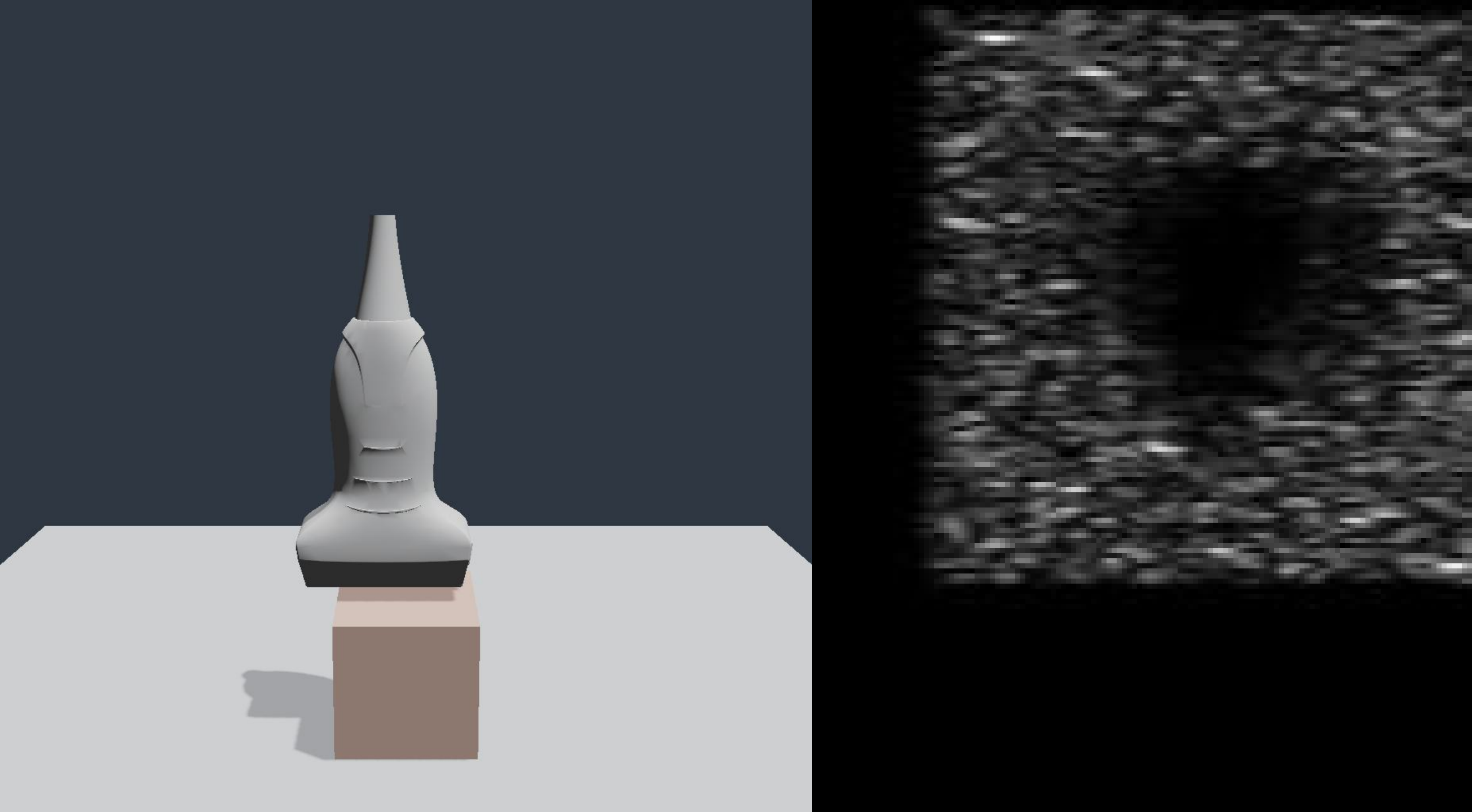
UltrasoundScan.#
Beyond these RL environments, CRESSim-Neo also includes surgery-relevant scenes for suturing with a curved needle and thread passing through deformable tissue, cable-driven continuum robot (CDCR) demonstrations based on routed cable constraints, and thermal coagulation with varying tissue properties under heat transfer.
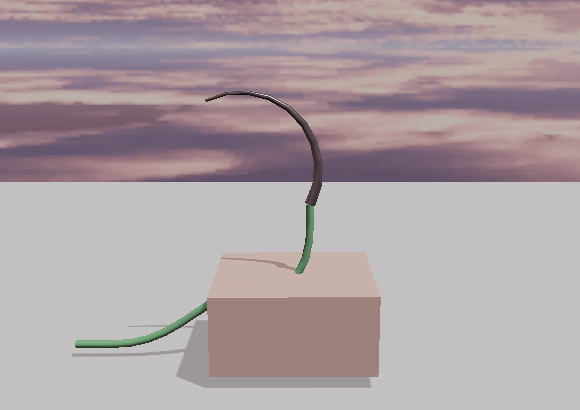
Soft-body suturing.#
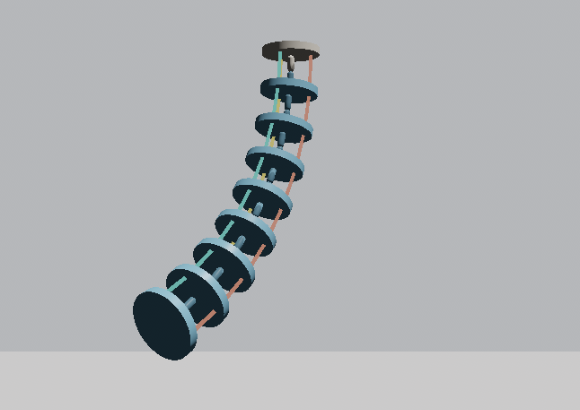
An approximated CDCR with spherical joints modeling the backbone.#
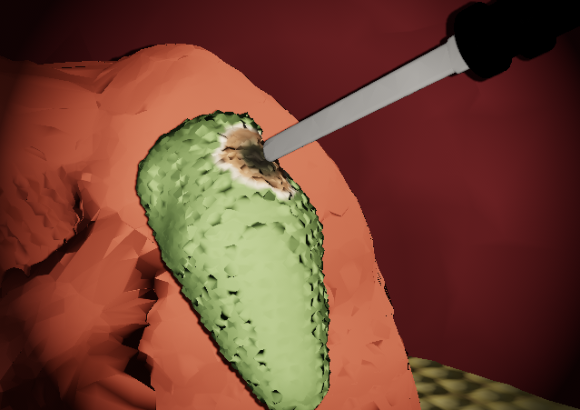
Thermal coagulation with varying tissue properties and appearance under heat transfer.#